
PEIRAN LI
Research field:AI/Data Science
PEIRAN LI
Research field:AI/Data Science
●What are your current research interests?
I’m now exploring how to use generative AI models—particularly diffusion and large language models—to simulate and understand large-scale human mobility across cities and regions. My broader interest lies in connecting data-driven modeling with real-world urban and social systems.
●What do you enjoy most about research?
I enjoy discovering unexpected patterns hidden in complex data and transforming them into interpretable insights.
● What does research mean to you?(In a nutshell)
To find things we cannot see by eyes but could be revealed by data.
●What inspired you to become a researcher?
By how data and algorithms can reveal real-wrold behavior.
●What are your future goals as a researcher?
I hope to broaden my research scope—from domain-specific spatiotemporal data analysis to more general data science research. My goal is to develop versatile methodologies that can be applied across different types of data and contribute to solving diverse real-world problems.
David Uriel SOCOL DE LA OSA
Research field:Law
David Uriel SOCOL DE LA OSA
Research field:Law
●What are your current research interests?
Law & Technology; Corporate Law; International Economic Law; AI Governance; Geopolitics; Infrastructure
●What do you enjoy most about research?
What I enjoy most about research is the ability to engage directly with the world’s most pressing questions – to ask what is happening, and how can I help. Research gives me the space to think systematically about the structural forces shaping society and to contribute ideas that may improve them. I value the combination of intellectual independence and practical relevance: the opportunity to step back, understand complexity, and then re-enter public debates with work that is rigorous, constructive, and oriented toward real-world impact.
● What does research mean to you?(In a nutshell)
To me, research is the convergence point between expertise, societal need, and principled intention. It is a disciplined way of thinking about problems that matter, grounded in evidence but animated by a sense of responsibility to the broader public. Research is not simply producing knowledge; it is designing frameworks through which institutions, technologies, and societies can navigate uncertainty – ideally with fairness, foresight, and humility.
●What inspired you to become a researcher?
I became a researcher because, across diplomacy, legal practice, and now academia, I find myself drawn to the underlying structures that shape law and how law creates societal structures – the systems of governance, incentives, and coordination that determine whether societies respond to challenges effectively. Research offered a way to engage those questions at their foundations. I wanted to understand how institutions succeed or fail, how technology reshapes governance, and how global systems can be made more equitable and resilient. Some of my key inspirations are the strength of true intellectual curiosity, combined with a desire to contribute meaningfully to public problem-solving.
●What are your future goals as a researcher?
My future goals revolve around building frameworks that help society govern transformative technologies responsibly, sustainably, and at a global scale. Substantively, I aim to deepen work on AI governance, critical mineral supply chains, and the geopolitical architecture of technological development. Institutionally, I hope to contribute to collaborative research communities across law, social science, and technical fields, that can translate scholarship into practical guidance for policymakers, industry, and international institutions. Ultimately, my goal is to shape research that not only advances academic understanding but also strengthens the capacity of societies to manage technological change with fairness, foresight, and institutional integrity.

Shaofeng Zheng
Research field:Social Psychology, Cultural Psychology
Shaofeng Zheng
Research field:Social Psychology, Cultural Psychology
●What are your current research interests?
How gene and environmental factors (e.g., culture, childhood experience) independently and interactively shape individuals’ empathy and support-seeking
●What do you enjoy most about research?
Writing interesting papers
● What does research mean to you?(In a nutshell)
Solve problems with a systematic, scientific approach
●What inspired you to become a researcher?
Understanding human nature
●What are your future goals as a researcher?
Create my own theory or research field and inspire others to join me
Danielle FLONK
Research field:Humanities & Social Sciences
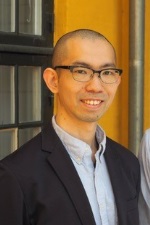
Toshimitsu Aritake
Research field:Statictical machine learning
Toshimitsu Aritake
Research field:Statictical machine learning
●What are your current research interests?
I am focusing on machine learning, particularly researching distribution shift aspects such as transfer learning and domain adaptation, and also meta-optimization, which involves learning how to optimize.
●What do you enjoy most about research?
I feel a sense of excitement when I thoroughly understand the problem at hand and come up with models or analytical methods that fit that problem well.
● What does research mean to you?(In a nutshell)
The pursuit of novelty and self-improvement.
●What inspired you to become a researcher?
Initially, I was motivated by my admiration for how my mentor and senior colleagues in the lab approached their research. Afterward, I worked at a company, but I couldn’t let go of my desire to become a researcher, so I returned to the path of research.
●What are your future goals as a researcher?
I aim to advance research on two fronts: addressing practical problems while also tackling mathematically intriguing problems.
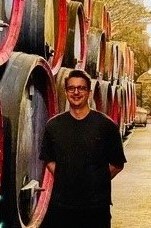
Marco Nutta
Research field:Marketing
Marco Nutta
Research field:Marketing
●What are your current research interests?
Branding, Brand coolness, consumer behavior, foodservice and lodging marketing
●What do you enjoy most about research?
Learning a new skill each time I start a project.
● What does research mean to you?(In a nutshell)
Discovering the unknown and confirming or denying assumptions
●What inspired you to become a researcher?
My mother because she is a researcher and I always wanted to be like her.
●What are your future goals as a researcher?
I would like to be well-known for brand coolness research. Additionally, my field lacks theoretical development and I would like to one day to contribute to the development of a new theory specific to hospitality and tourism.
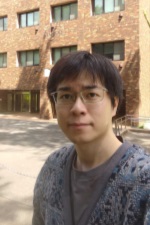
Ryoya Yamasaki
Research field:Machine Learning, Statistics
Ryoya Yamasaki
Research field:Machine Learning, Statistics
●What are your current research interests?
Ordinal regression, Sparse modeling
●What do you enjoy most about research?
I like being able to decide what to do by myself.
● What does research mean to you?(In a nutshell)
It’s just something I like to do, but I have to be cognizant of a job 🙂
●What inspired you to become a researcher?
I got hooked on ‘PSYCHO-PASS’ and ‘Ghost in the Shell’ when I was in a high school. This led me to informatics and research.
●What are your future goals as a researcher?
I want to do research that will still be cited 100 years from now.
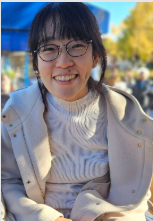
Asako Toyama
Research field:Experimental psychology , Computational Behavioral Science
Asako Toyama
Research field:Experimental psychology , Computational Behavioral Science
●What are your current research interests?
Decision-making, reinforcement learning models, emotion, physiological responses, computational psychiatry
●What do you enjoy most about research?
I enjoy being able to approach topics of interest in my own way while learning along the way. I also find it exciting to hear about other researchers’ work.
● What does research mean to you?(In a nutshell)
Trial and error driven by curiosity
●What inspired you to become a researcher?
I initially became interested in memory, which led me to study psychology. Over time, my research interests expanded to various other topics.
●What are your future goals as a researcher?
I aspire to be a researcher who integrates multiple perspectives—such as cognitive science, computational modeling, and psychology—to deepen our understanding of human behavior and the mind.
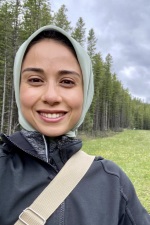
Kareman Yassin
Research field:Applied Microeconomics and Enviromental Economics
Kareman Yassin
Research field:Applied Microeconomics and Enviromental Economics
●What are your current research interests?
My current research closely aligns with global efforts for net-zero carbon emissions by 2050
●What do you enjoy most about research?
I enjoy delving deeply into topics that sparks my curiosity with the goal of making contributions that could benefit others in the future.
●What does research mean to you?(In a nutshell)
Developing a deep and comprehensive understanding of a single topic.
●What inspired you to become a researcher?
My grandfather, a professor of physiology, had a deep love for science and was known for his strong work ethic and unwavering commitment to both his research and his students.
●What are your future goals as a researcher?
To establish collaborations with both the public and private sectors to develop innovative, feasible, and evidence-based policies that bring us closer to achieving the net-zero carbon emission target.
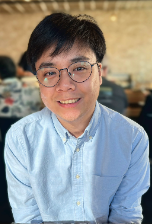
Huynh Nguyen Khoi
Research field:International Relations, Quantitative Methodology
Huynh Nguyen Khoi
Research field:International Relations, Quantitative Methodology
●What are your current research interests?
My main interests are studying the dynamics between globalization and populism. I am also working on applications of machine learning and causal inference methods in social sciences.
●What do you enjoy most about research?
Finishing a project and sharing my ideas with others
● What does research mean to you?(In a nutshell)
Understand the world more little by little
●What inspired you to become a researcher?
I have always been curious about studying politics, but it was my professors and mentors that really inspired me to pursue research and academia.
●What are your future goals as a researcher?
I hope to expand my skillset and collaborate with many other researchers.